Fleeting Forbearance in a World of Persistent Financial Distress
Macroeconomics · Finance · Growth
Juan M.
Sánchez
Senior Economic Policy Advisor II
Federal Reserve Bank of St. Louis
My research studies household financial distress, firm dynamics and productivity, credit markets, macro-finance, sovereign debt, and quantitative macroeconomics. I also teach Quantitative Macro in the Ph.D. program at Washington University in St. Louis.
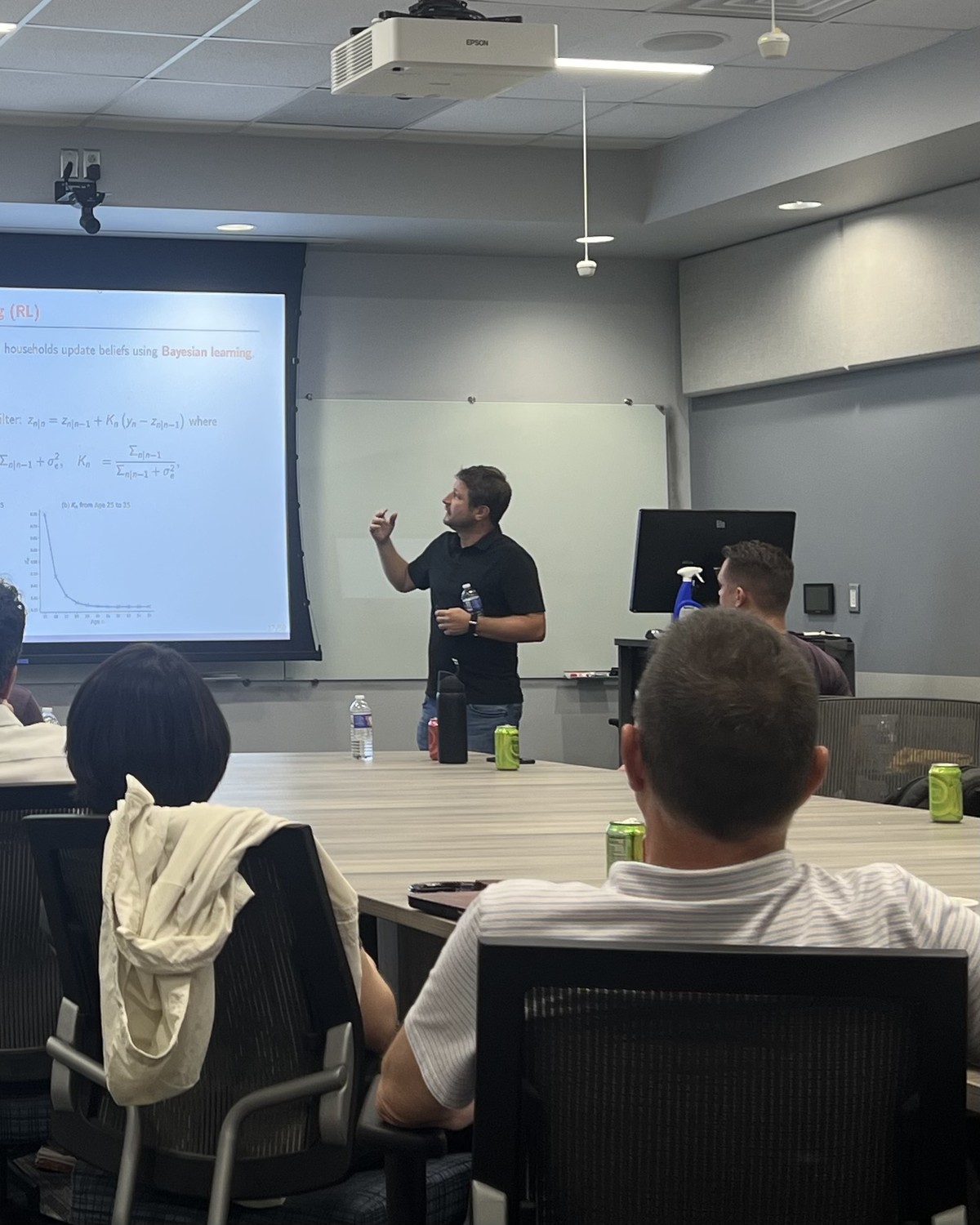
Presenting research at the Stockman Conference at the University of Rochester.
Work in Progress
Current projects.
Debt Maturity and Market Timing
Debt, Distress, and Default Across Countries
Cash is King
Publications
Journal articles.
From Population Growth to TFP Growth
Policy Rules and Large Crises in Emerging Markets
Domestic Policies and Sovereign Default
The Effects of Macroeconomic Shocks: Household Financial Distress Matters
Evergreening
Financing Ventures
Improving Sovereign Debt Restructurings
Sovereign Debt Restructurings
Designing Unemployment Insurance for Developing Countries
News, Debt Maturity, and Sovereign Default
The Persistence of Financial Distress
Natural Resources and Global Capital Misallocation
Investment and Bilateral Insurance
Sovereign Default and Maturity Choice
Bankruptcy and Delinquency in a Model of Unsecured Debt
The IT Revolution and the Unsecured Credit Market
Revisiting the Behavior of Small and Large Firms during the 2008 Financial Crisis
Why Doesn’t Technology Flow from Rich to Poor Countries?
Mortgage Defaults
Labor Market Upheaval, Default Regulations, and Consumer Debt
Quantifying the Impact of Financial Development on Economic Development
Financing Development: The Role of Information Costs
Fiscal Policy and Default Risk in Emerging Markets
Unemployment Insurance with a Hidden Labor Market
Optimal State-Contingent Unemployment Insurance
Other Publications
Policy articles, essays, and commentary.
2026
Tracking the Shift from Mortgage Refinancings to HELOCs
Financing R&D Spending: The Role of Corporate Cash Holdings
2025
The Broad, Continuing Rise in Delinquent U.S. Credit Card Debt Revisited
Cryptocurrency Ownership among U.S. Households
Real-Time Estimates of Differences in Real Expenditure Growth and Inflation across Households
2024
The Link between Falling Population and Productivity
The Broad, Continuing Rise in U.S. Credit Card Debt Delinquency
Output Gaps, Taylor Rule and the Stance of Monetary Policy
Uneven Consumption Growth in the COVID-19 Economic Recovery
Understanding the Recent Evolution of Auto Loans by Income Level
2023
What Drove the Growth in Credit Scores during the COVID-19 Pandemic?
How Are Financial Conditions Tracked?
The Economic Impact of COVID-19 around the World
External Shocks versus Domestic Policies in Emerging Markets
An Elementary Model of VC Financing and Growth
2022
Venture Capital: A Catalyst for Innovation and Growth
2021
Foreclosure Rate Drops during COVID-19 despite Dip in On-Time Mortgage Payments
2020
How Will COVID-19 Affect Financial Assets, Delinquency and Bankruptcy?
How Will COVID-19 Affect the Spending of Financially Distressed Households?
COVID-19 and Financial Distress: Vulnerability to Infection and Death
How COVID-19 Has Affected the Municipal Bond Market
Reconstructing the Great Recession
2019
Tax Cuts, Venture Capital, and Long-Term Growth
The Unequal Recovery: Measuring Financial Distress by ZIP Code
Areas in Financial Distress Are More Likely to Stay that Way
Dos Problemas de la Flotación y una Propuesta
Should Capital Flow from Rich to Poor Countries?
2018
Why Is Inflation So Low?
Do Millennials Pay Their Debts Back?
Reestructuración de Deuda Soberana: ¿Ayuda Extender la Madurez?
¿Qué pasa con la inflación?
2017
¿Por qué Argentina pide prestado a tan largo plazo?
Do Financial Conditions Affect the Economy?
2016
District Households Buck the Trend To Pay Down Debt
Some Current Labor Trends Pre-Date the Great Recession
The Dynamics of Mortgage Debt in Default
2015
Costs of Defaulting on Credit Card Debt Depend on the “Exit” Taken
Changes in Income Gaps Might Overstate Changes in Welfare Gaps
Growth around the World Is Still Below the Trend U.S. Faring Better
Student Loan Delinquency: A Big Problem Getting Worse?
What Drives Household Debt?
How Credit Card Debt Default Has Evolved
The Relationship between Wage Growth and Inflation
2014
Credit to Noncorporate Businesses Remains Tight
Paying Down Credit Card Debt: A Breakdown by Income and Age
The Ups and Downs of Inflation and the Role of Fed Credibility
A Look at Japan's Slowdown and Its Turnaround Plan
Why Is Credit Card Delinquency Declining?
Fewer Younger Richer Households Have Negative Home Equity
Credit Card Delinquency Rates Falling Faster for Younger Households
Delinquency Rate on Credit Card Loans at Historical Low
Increasing House Values Playing Significant Role in Wealth Recovery
2013
Europe’s Lessons on Preventing Mortgage Defaults
Why Are Corporations Holding So Much Cash?
The Role of Total Hours Worked in Japan's (Lack of) GDP Growth
Life Cycle Patterns and Boom-Bust Dynamics in U.S. Housing Prices
The Size and Growth of Businesses Started During the Financial Crisis
Why Is Output Growth So Slow?
2012
Job Gains and Losses at Large and Small Firms during the Great Recession
Starting a Business During a Recovery: This Time, It's Different
District Overview: Reallocation of Credit, a Measure of Financial Activity Has Yet to Bounce Back
The Deleveraging of U.S. Households Since the Financial Crisis
Firm Size and Employment Dynamics in Recessions and Recoveries
The Relationships Among Changes in GDP, Employment, and Unemployment
Employment Dynamics During Economic Recoveries
Can Repatriation Taxes Explain the Recent Increase in Cash Holdings?
2011
Why Is Employment Growth So Low?
El spread en el sistema bancario y la delegación de tareas en la actividad productiva
Teaching
Washington University in St. Louis.
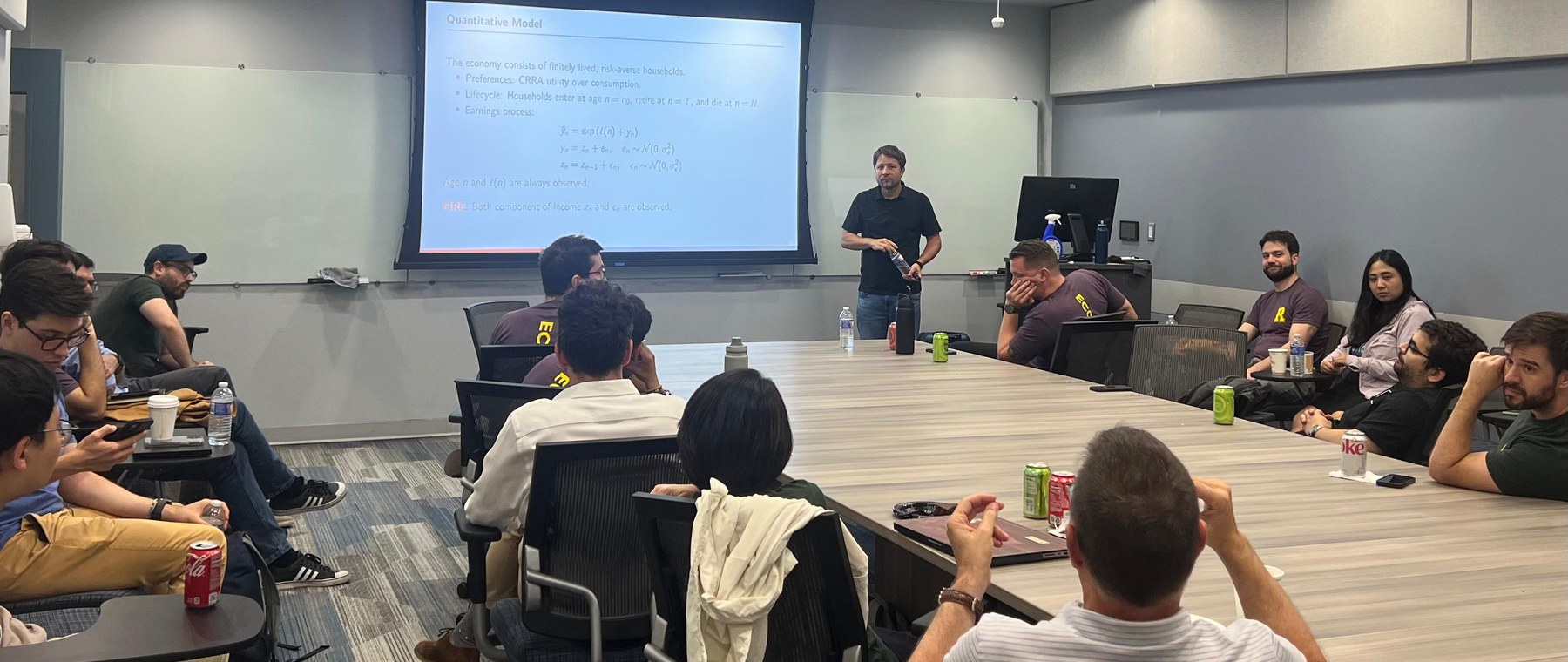
Econ 8240: Quantitative Macro
Ph.D. course in modern quantitative macroeconomics · 2018–Present
· Syllabus
Money and Banking
Undergraduate course · 2013–2016
Contact
Professional information and links.
Juan M. Sánchez
Federal Reserve Bank of St. Louis
One Federal Reserve Bank Plaza
St. Louis, MO 63102